
The 130-million-year-old Taman Negara has one of the most powerful stories of nature conservation. Before 1925, Taman Negara was named Gunung Tahan Game Reserve, a playground for big-game hunting, targeting large wildlifes like Asian elephants and Malayan tigers.
Theodore Hubback was a British hunter, chasing animals for the thrill of the game. When he saw the depletion of wildlife due to mass big-game hunting, he later turned towards conservation.
Between 1926 and 1930s, Hubback lobbied the Malay sultans to turn this game reserve into a protected multi-state nature park.
In 1938, it was gazetted as King George V National Park with a strict hunting ban. It was eventually renamed to Taman Negara, post-independence in 1960.
Wildlife conservation continues to this day, and it made me appreciate my visit to Taman Negara even more.
Different sides of Taman Negara
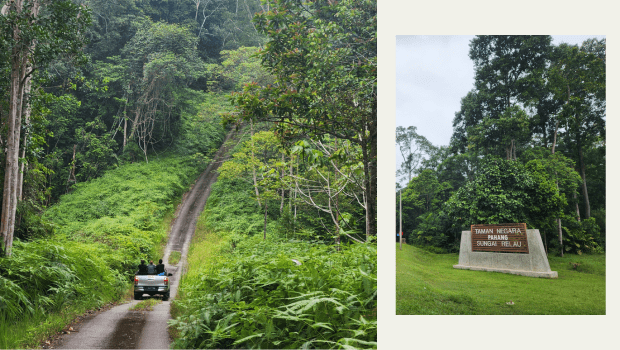
While the majority of Taman Negara’s visitors come through Kuala Tahan, there are four ways to enter Taman Negara:
- Kuala Tahan, Pahang – the most popular
- Kuala Koh, Kelantan
- Tanjong Mentong, Terengganu
- Sungai Relau, Merapoh – the one I went with The Habitat Expeditions
The multiple entry points provide different experiences for visitors. Spanning 4,430 square kilometers, it covers verdant areas of Pahang, Kelantan, and Terengganu.
For Sungai Relau entry point, visitors must register at Taman Negara Sungai Relau headquarters. Then be assigned with nature guides who will take you to different spots within Taman Negara via a four wheel drive. Visitors are not allowed to drive their personal vehicles into the national park.
Tree Top Walk
Roughly 30 minutes on the park’s 4WD, I arrived at Tree Top Walk, one of my favourite vantage points to see the beauty of Taman Negara.
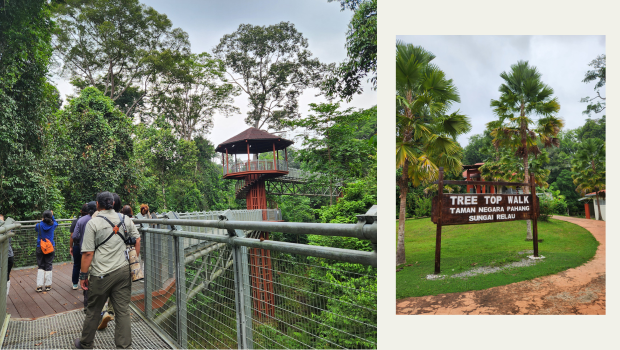
Completed in 2022, the walkway forms a loop connecting six towers. The tallest tower called Menara Tahan stands at 32 meters high (named after Gunung Tahan, the highest peak in Peninsular Malaysia). Interestingly, the other towers are named after unique tree species found in Taman Negara, like Meranti and Tualang.
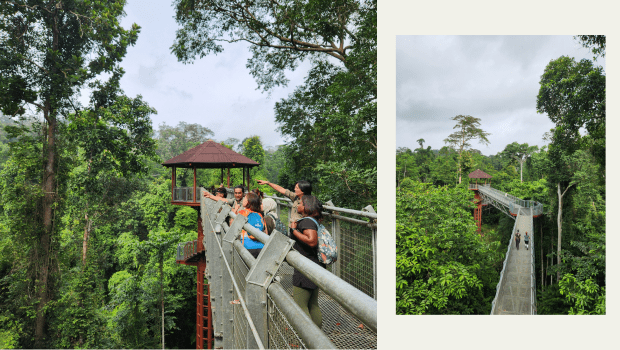
The walk largely felt like I was floating among tree tops. The elevated suspension bridges were strong and stable, so worry less of the swaying motions during strong winds. Binoculars are a must, if you don’t have superhuman vision, as Taman Negara is a jungle gym for birds, monkeys, and other wildlifes.
Birding
Speaking of birds, any birding enthusiasts would know that the Sungai Relau side leads to higher chances of discoverability.
The national park has 479 recorded species of birds, including 9 species of hornbills. This is something that the park takes pride in since Sarawak, the Land of Hornbills, only has 8 species.
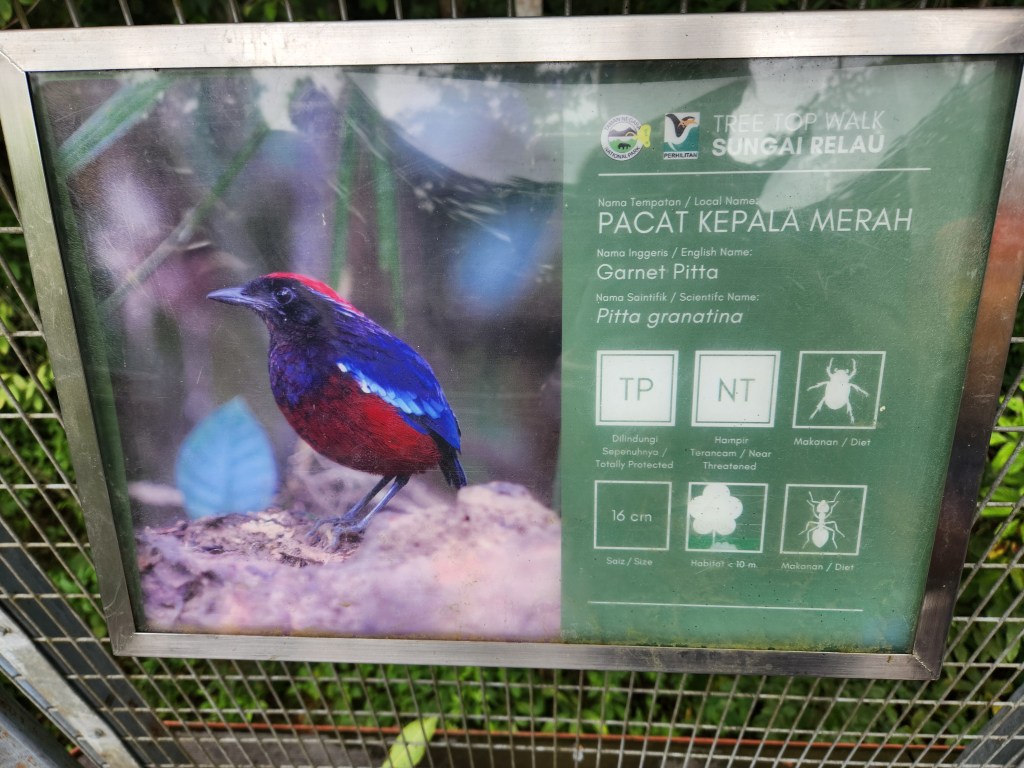
For anyone who has a birding knowledge of a rock (like myself), come with the curiousity to learn and you will leave a pocketful of fun facts. One of our guide is a birding photographer, and I enjoyed seeing his face lights up when talking about the elusive Garnet Pitta. A tiny bird that lurks in low trees and jungle floor but with an appetite for leeches. We tried to wait for it, but it never came out.
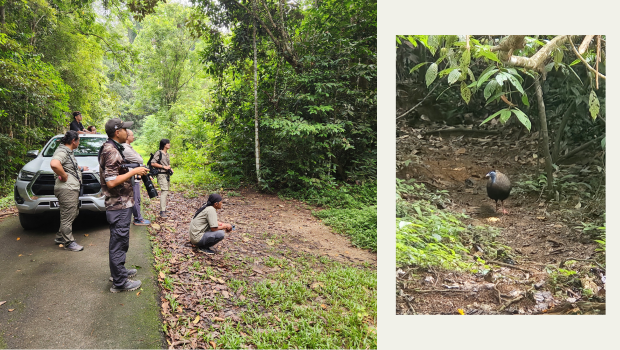
Another bird that I was lucky enough to see is the Great Argus. A dark grey pheasant with a very long feathered tail (longer than an arm’s length). Seeing it in person felt like seeing a mirage. Before I realized that the Great Angus was right in front of my binoculars, it turned and disappeared before I could take a photo.
Two words to sum up my first birding experience?
A gift.
Kuala Juram Fish Santuary and Lata Bunian
A short ride on the 4WD later, we were soaking our feet in Sungai Juram. Verdant trees shield us from the sun, and the crystal clear water gave a reason to take off our leech socks.
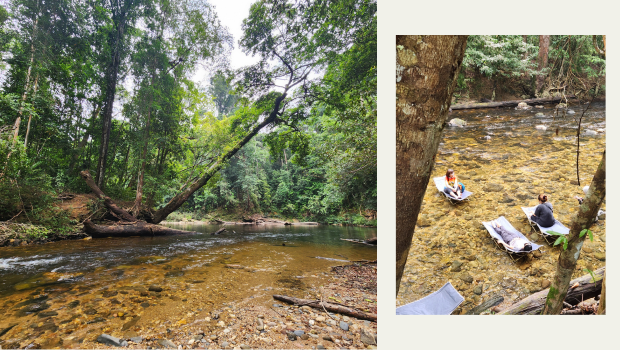
The Habitat Expeditions was also gracious to set up a camping bed in the river. Just what we need to lay down, close our eyes, and listen to the river flowing gently beneath us.
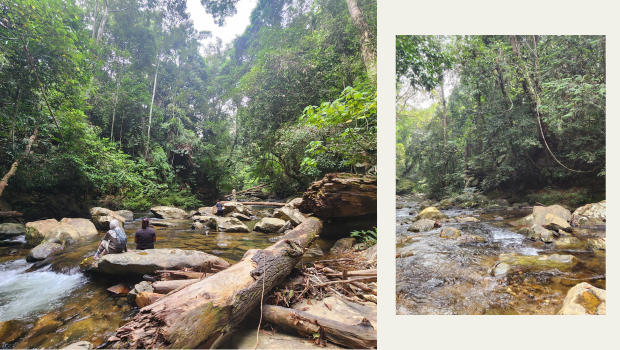
As a special treat, our guide also took us to Lata Bunian via the Kuala Tahan entrance. When we arrived, we were the only ones there and some took the opportunity to go wild swimming.
Gua Denai Gajah
Our final dose of the outdoors is Gua Denai Gajah. The fact that the 4km stretch is an actual path where elephants and other animals cross was unbelievable.
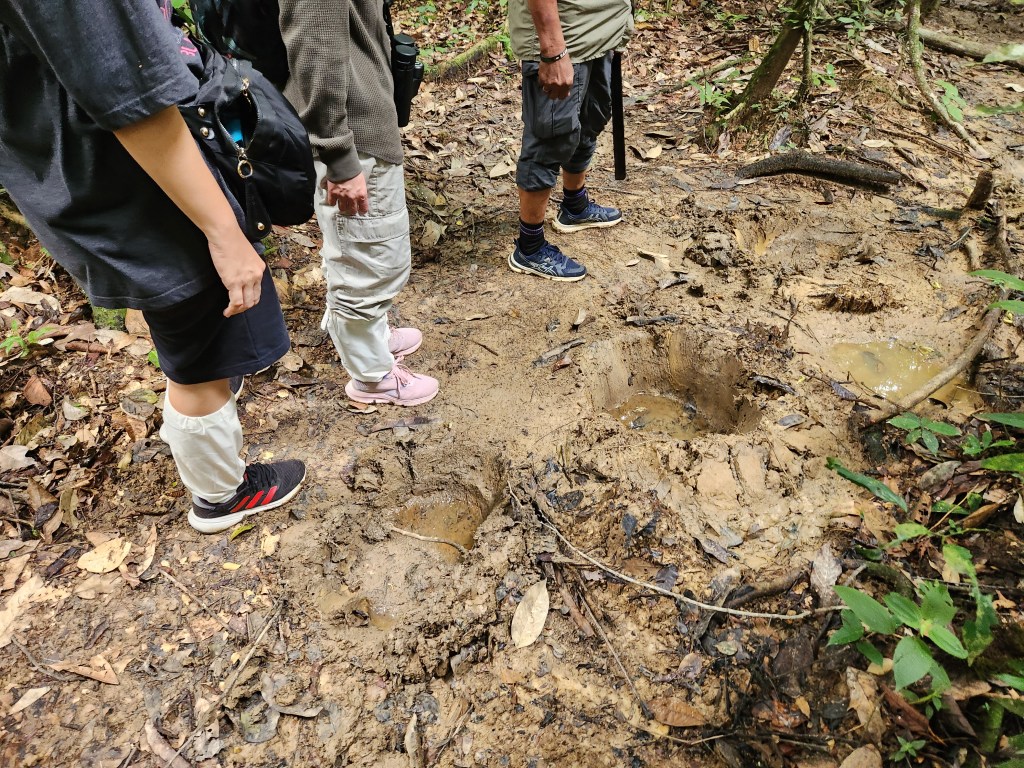
We only explored 100 meters of the trail and saw elephant footprints! Words can’t describe how surreal it was to compare them to the size of our feet. Rounded edges and deep in the mud. Our guide even hinted that these gentle giants had likely walked through the day before, which explains how fresh it was.
My exploration in Taman Negara was part of The Habitat Expeditions’ Merapoh and Gua Musang trip. It also includes
 Cheng Sim