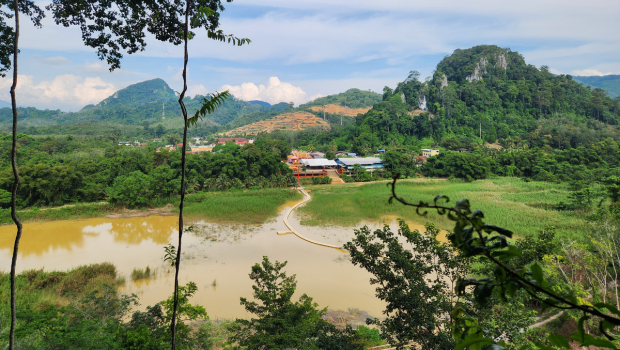
Kelantan takes great pride in many things, and Gua Musang is one of them. As the state’s largest district with a population of over 100,000, it’s about 26 times the size of Kuala Lumpur. They have so much to offer, and it all starts here:
Shui Yue Gong Temple, Kampung Pulai
Despite gentrification’s best efforts, Kampung Pulai remains unrushed by time. A 15-minute drive from Gua Musang, this traditional Hakka settlement has been around since 1426, and that’s 600 years!
Around the same time when Chinese admiral Zheng He (Laksamana Cheng Ho) made his inaugural voyage to Melaka, a group of Chinese settlers ventured to Kampung Pulai in search for alluvial gold deposits. Gold mining then became a great source of wealth. When supplies depleted, the same Hakka settlers switched to agriculture and remain in Kampung Pulai for seven generations since.
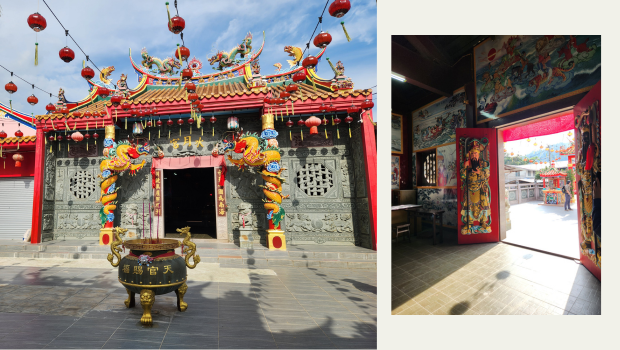
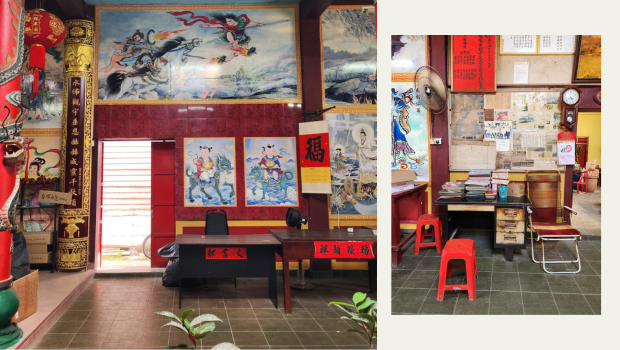
Sungai Galas gently flows through the village. Shui Yue Gong (Water Moon), one of the country’s oldest temple, has the best view of it. Before 1948, the temple was originally a small hut built from mud and bamboo. After a series of renovations, it has now become a beautifully ornate temple we see today.
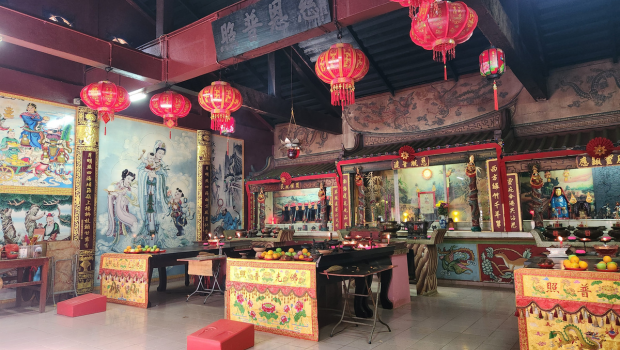
Some say that the temple houses a vase from the Ming Dynasty, evident of its long-standing history, but I wasn’t able to see them in person. Gracing the main altar is Guan Yin, the Goddess of Mercy, together with other deities.
Pulai Princess Hill
The unconditional worship of Guan Yin echoes beyond the temple. Walk across the hanging bridge of Sungai Galas to see a massive limestone outcrop named Pulai Princess Hill.
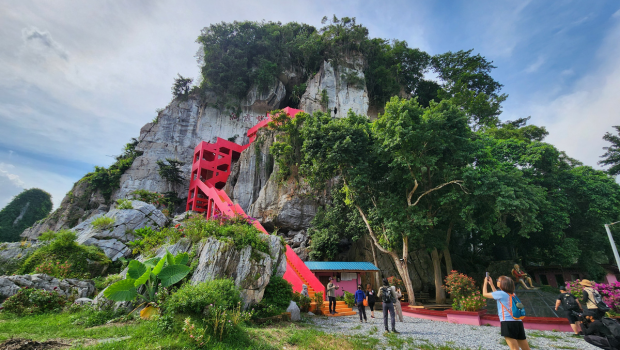
The cave chamber is accessible via the concrete steps leading up to the cave. All thanks to a villager who envisioned the stairs and decided to built them in 1997. According to the caretaker, there are 168 steps in total.
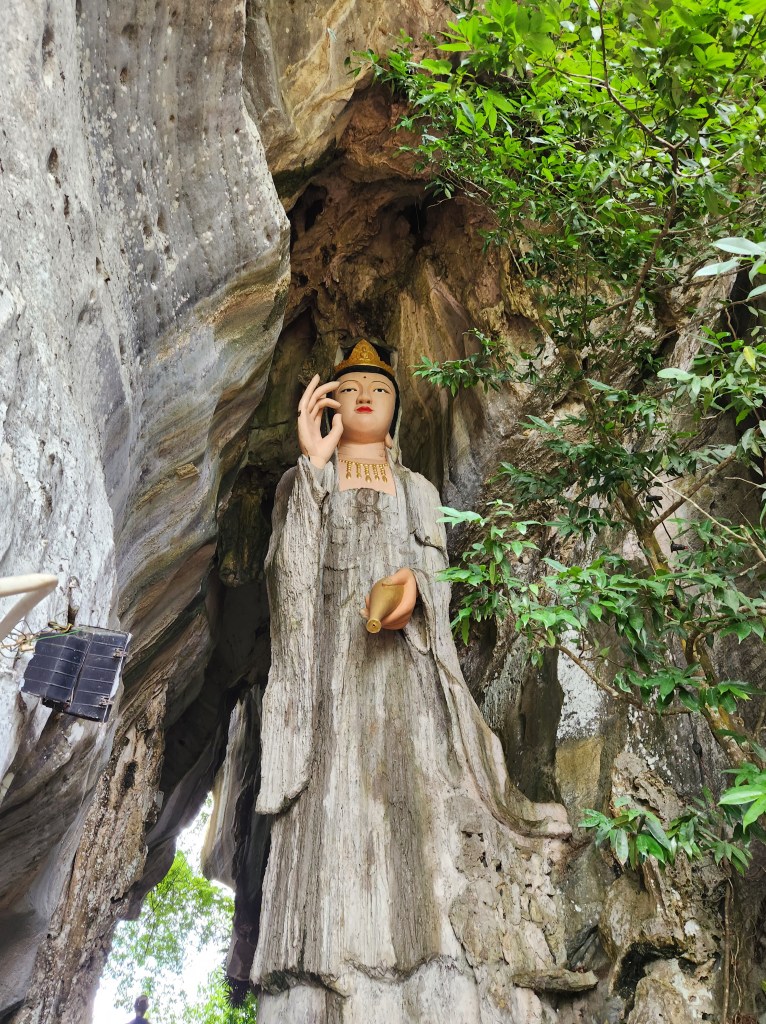
Anyone who reaches the top is promised an up-close view of the 12-meter high Guan Yin statue carved entirely from natural stalagmite.
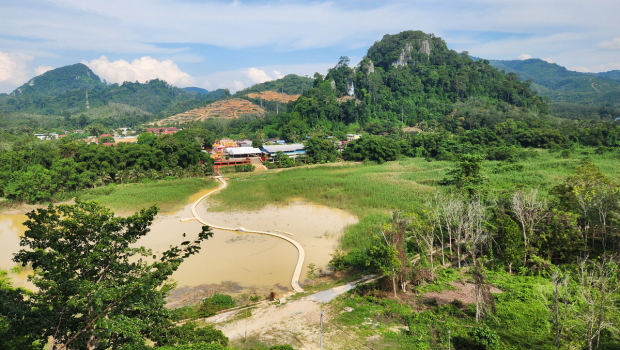
From this vantage point, you can see what the Goddess of Mercy watches over: the tranquil Kampung Pulai and the people that call it home.
Gua Musang
The district of Gua Musang is named after a cave of the same name. To understand its significance is to know the folk tales and history that shape it.
According to a local folklore, it began when raging storm that split the cave open. When they saw civet cats entered the cave but none came back out, they named it Gua Musang, the cave of the civet cats.
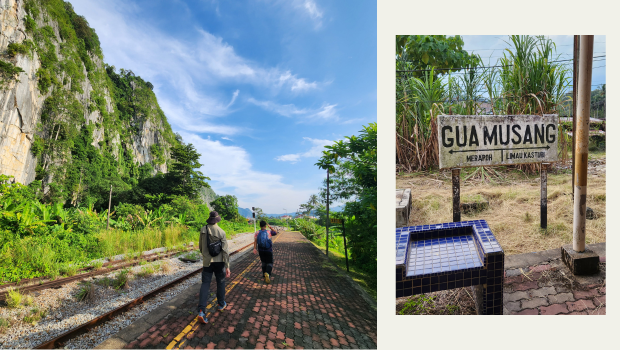
Historically, this cave was also the center of the 1984 Gua Musang Emergency. During that time, the special operations unit of the Royal Malaysia Police was working to put down a series of violent incidents by the Communist Party of Malaya (CPM) in Kelantan’s remote areas. Gua Musang was a formidable stronghold for the communists, as they leaned on the limestone exterior for protection.
Today, Gua Musang is open to the public. The only way to enter Gua Musang is through Muse Ecopark, where a caving guide is assigned to visitors upon entry. If you’re wondering, “Muse” (pronounced moo-seh) is how Musang is pronounced in Kelantanese dialect.
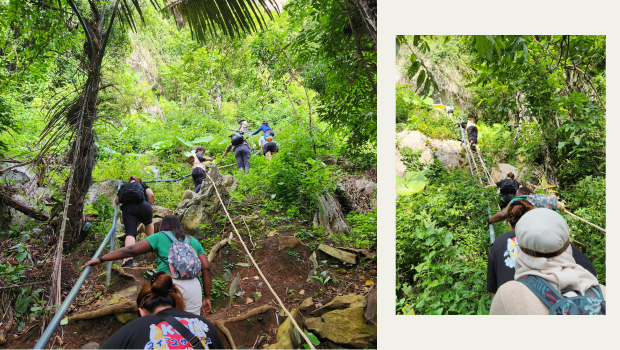
The path leading to Gua Musang involves a long flight of stairs and several climbs on a 90-degree aluminum ladder to reach the top. Intimidating in sight, but it’s completely beginner-friendly.
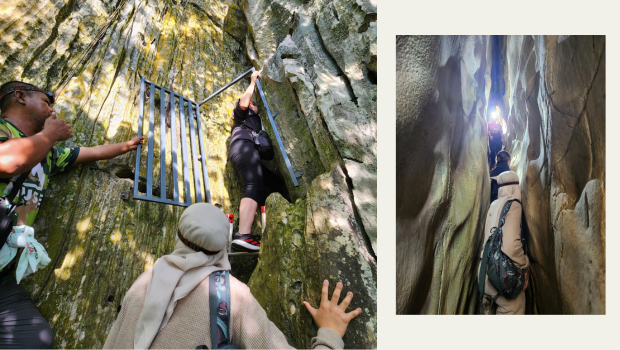
The entrance itself is small, requiring visitors to squeeze through narrow cracks. Once you passed through it, the majestic Gua Musang reveals itself.
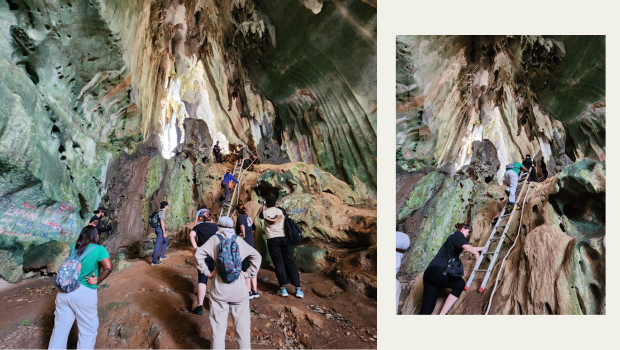
During this trip, I learned that Gua Musang is considered a “dead cave”, meaning the stalactites have stopped dripping onto the stalagmites below. So much of the pathways are dry and chalky.
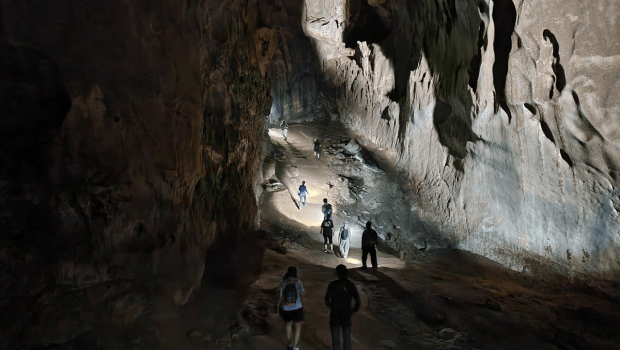
Inside, there are no wind or cool breeze, but the cave has several openings that provide a surprisingly good ventilation throughout.
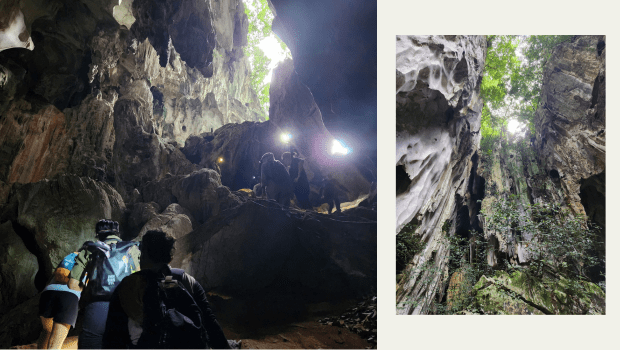
If you have a chance, come mid-afternoon so you can go easy on the exploration and still have a chance to view the sunset from a higher vantage point.
My visit to Kampung Pulai and Gua Musang was part of The Habitat Expeditions’ Merapoh and Gua Musang trip. It also includes
 Cheng Sim