Just a 30-minute drive from Gua Musang, Merapoh goes beyond its reputation as a caving paradise. Beneath its majestic limestone karsts lies a story of conservation efforts and community-led resilience.
In November 2013, the Pahang state government halted a proposed cement and clinker plant project near Kampung Merapoh, after years of protest from local community leaders, the Malaysian Nature Society and international cave exploration clubs.
In 2018, Sultan of Pahang, Tengku Abdullah Sultan Ahmad Shah, also gazetted the Merapoh forest as a protected forest reserve, putting an end to logging and development projects in the area.
Both of these efforts have protected the recorded number of more than 500 caves hidden within limestone karsts. There are only 100 caves that have been fully explored today, but 12 are open to the public.
During my trip with The Habitat Expeditions, I visited two caves, each named after a distinctive feature within.
Gua Sisik Naga
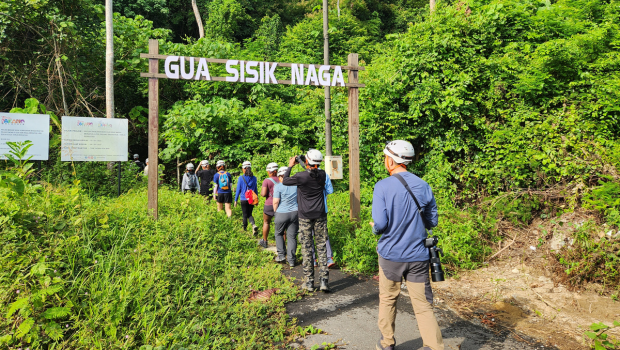
Gua Sisik Naga (meaning dragon’s scales cave) has a 800-meter stretch of wooden boardwalks running through it. Exploring the cave in its entirety takes 1.5 hours each way. Some sections are narrow with just 5 meters across, so protective helmets are provided.

For a long time, guano was harvested from Gua Sisik Naga and used to fertilise paddy fields. To make it easier for guano harvesters to work in total darkness, they create makeshift lamps using bottles of kerosene to illuminate the cave. The downside is, the soots from the kerosene deterred bats from returning. As supplies depleted, guano harvesting eventually stopped and the locals transitioned to other methods since.

The main chamber is 40 meters wide and 30 meters high. Just as impressive as its size is the story of how this cave came to be.
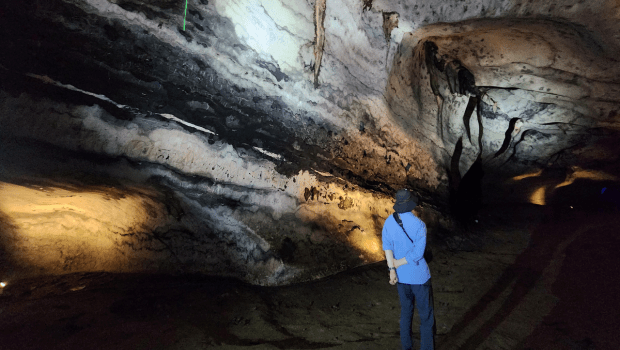
Let the markings on the wall unveil its origin story. Step back and see white streaks caused by an ancient earthquake many centuries ago.

The black spots are rich in silica, all formed when intense pressure melted the mineral, turning them black. White spots, however, are fossilized seashells from when an ancient river once flowed through the cave. The ceiling also has ripple-like formation called scallops that were shaped by wind and water.
The dots and layered streaks that decorate the seemingly neverending cave does resembles the dragon scales, hence its name.
Gua Tahi Bintang
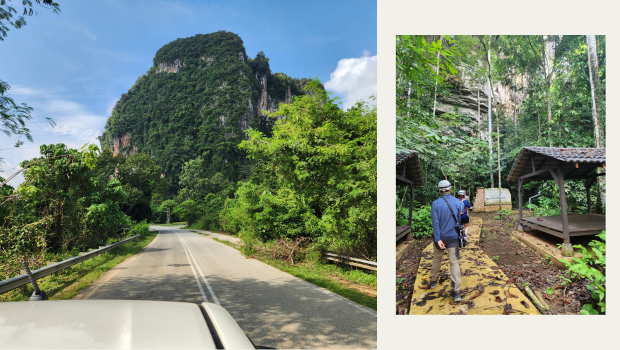
Known as one of the oldest caves in Merapoh, Gua Tahi Bintang is estimated to be 220 – 290 million years old, dating back to Permian-Triassic times. This cave was once a quarry that had been abandoned for 48 years, and visitors are required to wear safety helmets due to the risk of falling rocks.

Nature conservation continues at Gua Tahi Bintang until this day. Open to public, but visitors should only explore this cave with a guide.
Step inside and admire the cave walls displaying shimmering, star-like effect caused by calcium carbonate deposits at the point where tectonic plates once collided within the cave. Interestingly, the rooftop also has glittery sands due to the seven layers of mineral.
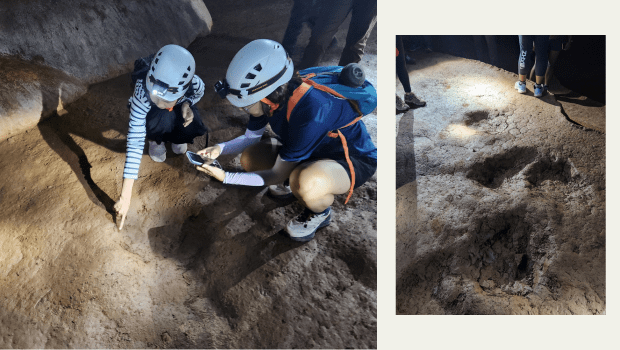
Past cave research have found fossils and seashells, as well as old elephant footprints, evident of their presence in the cave! Interestingly, Gua Tahi Bintang has a pool of water right at the cave’s end that flows during the rainy season as well as a spring containing traces of gold – this is something we didn’t see in person, but this fun fact continues to live with me even after the trip ended.
The Lipis Geopark, which includes the limestone karst formations and caves of Merapoh, was gazetted as Malaysia’s 11th National Geopark on November 8, 2023. There’s an immense hope that this will pave the way for its UNESCO recognition someday.
My cave exploration in Merapoh was part of The Habitat Expeditions’ Merapoh and Gua Musang trip. It also includes

